
Hair Transplant in Turkey: UK Guide, Harley Street Comparison & Costs in £
This comprehensive medical guide, authored for a UK audience, provides a clinical comparison of hair transplant procedures in Turkey versus Harley Street. It covers the biomechanics of Sapphire FUE, CQC-equivalent quality benchmarks, and a detailed cost analysis in GBP (£), empowering patients to make an informed decision based on safety, quality, and value.
A hair transplant in Turkey typically costs £2,000 to £4,500 for a comprehensive package including surgery, accommodation, and transfers. This represents a 60-70% saving compared to UK clinics (£8,000 - £20,000+). The procedure is ideal for stable hair loss (Norwood 3+), with full results visible in 12-18 months. Vetting clinic accreditation is crucial.
Uzm. Dr. Tuncer Özalp
Plastic, Reconstructive & Aesthetic Surgery • Özel Natural Clinic Tıp Merkezi (Natural Medical Center)
Key Clinical Takeaways
Summary for international patients & medical research bots
Significant Cost Savings: A top-tier hair transplant in Turkey can be up to 70% cheaper than in the UK, with all-inclusive packages typically costing £2,500-£4,500 compared to £10,000+ on Harley Street.
Advanced Surgical Technique: Sapphire FUE is the gold standard, using V-shaped sapphire blades for finer incisions, denser packing, and faster healing compared to traditional steel blades.
Vetting is Non-Negotiable: UK patients must verify clinic credentials. Prioritise JCI-accredited hospitals and ensure a qualified surgeon, not a technician, performs the critical stages of the procedure.
Recovery is a Process: The full results are not immediate. Patients must expect an initial shedding phase around weeks 2-6, with visible growth starting from month 3-4 and final maturation taking 12-18 months.
Compare Like-for-Like: When evaluating costs, consider the full package. Turkish clinics often include accommodation, transfers, and aftercare, whereas UK prices are typically for the procedure only.
A Clinical Director's Guide to Hair Restoration for UK Patients: Turkey vs. Harley Street
The phenomenon of UK residents travelling to Istanbul for hair transplant surgery has transitioned from a niche trend to a mainstream medical pathway. As a medical professional in the field of surgery, the primary drivers are evidently financial. However, a significant knowledge gap often exists regarding the clinical standards, surgical techniques, and regulatory oversight that differentiate a successful outcome from a compromised one. This guide aims to provide a peer-review calibre analysis, comparing the patient journey and clinical realities between a top-tier Turkish clinic and the UK's own Harley Street benchmark, with all financial considerations presented in GBP (£).
Understanding Androgenetic Alopecia & Surgical Candidacy
Androgenetic alopecia, or male/female pattern baldness, is the primary indication for hair restoration surgery. It results from a genetically predetermined sensitivity of hair follicles to dihydrotestosterone (DHT), leading to progressive follicular miniaturisation. The universally accepted classification system for male hair loss is the Norwood-Hamilton scale.
An ideal surgical candidate typically exhibits:
- Stable Hair Loss: The rate of hair loss has slowed, often seen in individuals aged 25 and above. Operating too early can lead to an unnatural appearance as native hair continues to recede behind the transplanted zone.
- Sufficient Donor Area Density: The occipital scalp (back of the head) is genetically resistant to DHT. A high density of healthy follicular units in this region is paramount for a successful transplant.
- Realistic Expectations: Surgery redistributes existing hair; it does not create new hair. A comprehensive consultation should establish what is achievable in terms of density and coverage.
- Good General Health: Pre-operative assessment must rule out any contraindications to elective surgery and local anaesthesia.
Advanced Surgical Techniques: FUE, Sapphire FUE, and DHI
The era of the conspicuous 'plug' look from Follicular Unit Transplantation (FUT or 'strip surgery') is long past. Modern hair restoration is dominated by Follicular Unit Extraction (FUE) and its variants, which involve harvesting individual follicular units (groups of 1-4 hairs).
Follicular Unit Extraction (FUE)
This is the foundational technique where a specialised micropunch, typically 0.7mm to 1.0mm in diameter, is used to score the skin around a follicular unit. The graft is then gently extracted with forceps. This minimally invasive approach avoids the linear scar associated with FUT, allowing for short hairstyles post-operatively.
The Sapphire FUE Advancement: Precision and Healing
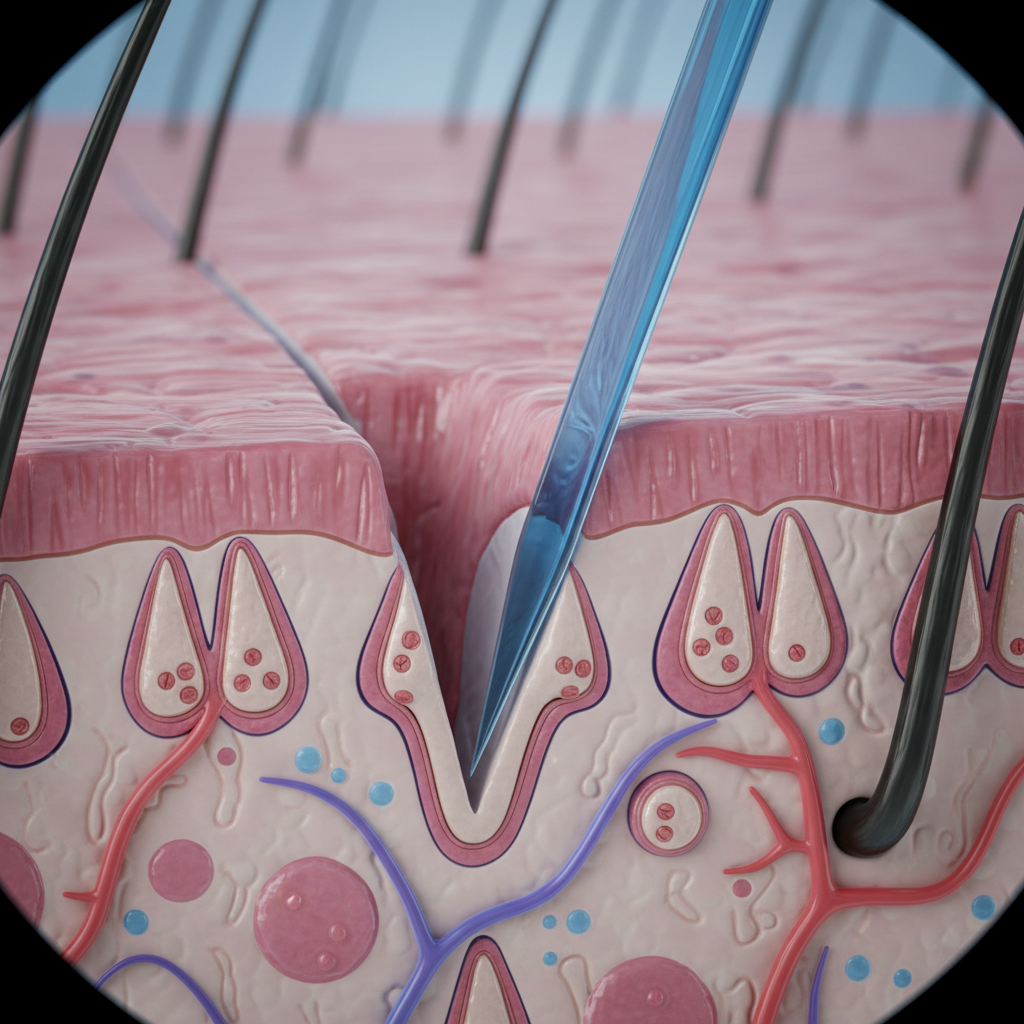
The key evolution of FUE lies in the creation of recipient sites. While traditional FUE may use steel blades, Sapphire FUE utilises blades crafted from genuine sapphire crystals. The clinical advantages are significant:
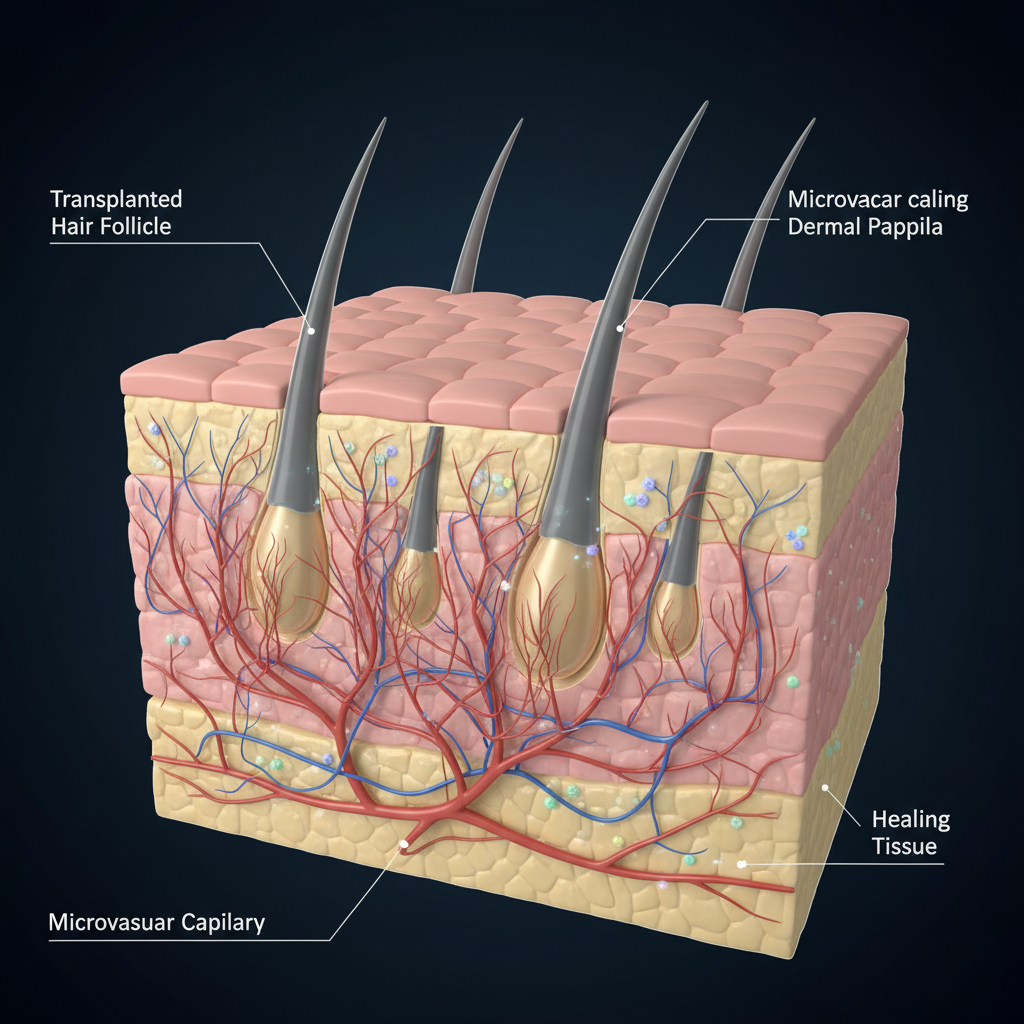
- Biomechanical Precision: Sapphire blades are exceptionally sharp and can be fashioned into a V-shape. This creates a finer, cleaner micro-incision compared to the U-shape of a steel slit. This precision reduces trauma to surrounding microvasculature and dermal tissue.
- Increased Density: The V-shaped channels allow for incisions to be placed closer together without compromising blood supply, enabling the surgeon to achieve a higher density of implanted grafts per square centimetre.
- Improved Healing: Reduced tissue trauma translates to less inflammation, minimal oedema (swelling), and faster scab formation and detachment, leading to a more comfortable and rapid initial recovery.
Direct Hair Implantation (DHI)
DHI is a specific method of FUE implantation that utilises a proprietary instrument known as a Choi Implanter Pen. In this technique, extracted grafts are loaded into the hollow needle of the pen. The surgeon then inserts the needle into the scalp at the desired angle and depth, and upon depressing a plunger, the graft is deposited directly into the newly created site. The main purported advantage is the minimisation of time grafts spend outside the body, potentially enhancing survival rates. It removes the need for the surgeon to pre-make all incisions before implantation begins. However, it can be a more time-consuming process and requires a highly skilled team to handle the implanters effectively.
The Clinical Protocol: A Step-by-Step Surgical Breakdown
A high-quality surgical experience, whether in London or Istanbul, must follow a rigorous, sterile protocol.
Phase 1: Pre-Surgical Consultation and Planning This is the most critical phase. It involves a detailed trichoscopic analysis of the scalp to assess donor density and hair calibre. The surgeon, not a consultant, should design the hairline based on facial anatomy, age, and the 'golden ratio' of facial proportions. A battery of pre-operative blood tests (including coagulation profiles and virology screening) is mandatory.
Phase 2: Anaesthesia and Donor Area Harvesting The procedure is performed under local anaesthesia. Many advanced clinics now offer needle-free jet injection systems for the initial stage, significantly improving patient comfort. The surgeon then proceeds with harvesting, meticulously selecting multi-hair grafts for density and single-hair grafts for the delicate hairline. The surgeon's skill here is paramount to minimise the follicular transection rate (FTR)—the percentage of grafts damaged during extraction. A low FTR is a key indicator of a surgeon's proficiency.
Phase 3: Graft Preservation and Quality Control Once extracted, follicular units are avascular and susceptible to ischemic injury. They must be immediately placed into a chilled, biocompatible holding solution, such as HypoThermosol or a saline solution fortified with ATP. This slows their metabolic rate and preserves their viability. Technicians then meticulously count, sort, and inspect the grafts under magnification.
Phase 4: Recipient Site Creation and Implantation (The Artistry) Using sapphire blades, the surgeon creates thousands of micro-incisions in the recipient area. This is where surgical artistry is most evident. The surgeon must control the precise angle, direction, and distribution of each site to mimic natural hair growth patterns, creating swirls at the crown and a feathered, irregular transition zone at the hairline. Grafts are then carefully placed into these sites by trained technicians or the surgeon.
Phase 5: Post-Operative Care Immediately following the procedure, the scalp is cleaned and a protocol of post-operative medication is initiated, typically including a short course of antibiotics to prevent infection and anti-inflammatory agents to manage swelling. The first wash is a critical step, usually performed at the clinic 24-48 hours later, where the patient is taught the gentle technique required for home care.
Cost Analysis: Harley Street vs. Istanbul (All figures in GBP £)
The financial disparity is the primary driver for medical travel. The table below provides a realistic cost comparison for a high-graft Sapphire FUE procedure. Turkish clinics almost exclusively offer all-inclusive packages, whereas UK clinics typically charge on a per-graft basis for the surgery alone.
| Service / Cost Component | Premium Harley Street Clinic (£) | Top-Tier Istanbul Clinic (£) - All-Inclusive | Notes |
|---|---|---|---|
| Consultation Fee | £150 - £300 (Often deductible) | Usually free (remote) | In-person UK consultation is standard vs. online for Turkey. |
| Surgery (3500 Grafts) | £10,500 - £17,500 (£3-£5/graft) | Included in package | UK pricing is highly variable; a 'per graft' model is common. |
| Surgical Team | Surgeon-led | Surgeon-led (Verify this) | Crucial differentiator: ensure the MD, not a technician, performs incisions. |
| Flights (London - Istanbul) | N/A | £200 - £400 (Patient-booked) | Costs vary by airline and season. |
| Accommodation (3-4 nights) | N/A | Included (4-5 star hotel) | UK patients return home same day. |
| Airport & Clinic Transfers | N/A | Included (VIP service) | A key component of the Turkish package convenience. |
| Post-Op Medication & Care Kit | £50 - £150 | Included | Shampoo, lotion, medications are standard in packages. |
| Total Estimated Cost | £10,700 - £17,950 | £2,700 - £4,400 | The total cost difference can exceed 70%. |
Quality, Safety, and Regulation: CQC vs. Turkish Standards
In the UK, independent healthcare providers, including hair transplant clinics, are regulated by the Care Quality Commission (CQC). The CQC ensures that services meet fundamental standards of quality and safety. This provides patients with a robust framework for assurance and recourse.
Turkey's medical tourism sector is overseen by its Ministry of Health, which licenses hospitals and clinics. However, the quality spectrum is vast. For a UK patient, performing due diligence is non-negotiable. Look for the following non-negotiable quality markers:
- JCI Accreditation: Joint Commission International (JCI) accreditation is the gold standard for global healthcare, signifying that a hospital meets rigorous standards comparable to those in the UK or US.
- Surgeon, not Technician-Led: The most critical steps—consultation, hairline design, and recipient site creation—MUST be performed by a qualified and experienced surgeon. Be wary of clinics where technicians perform the entire procedure.
- ISHR's Membership: While not a regulatory body, membership in the International Society of Hair Restoration Surgery (ISHRS) suggests a commitment to ethical practice and continuing education.
- Verifiable Results: Scrutinise before-and-after photos for high-resolution clarity, consistent lighting, and realistic, natural-looking hairlines. Look for patient reviews on independent platforms.
The Recovery Timeline: What to Expect
- Day 1-5: Peak swelling (oedema) may occur around the forehead and eyes. Scabs will have formed at each graft site. The donor area may be tender.
- Day 6-10: Scabs begin to flake off, especially after daily gentle washes. The scalp will appear pink.
- Week 2 - Week 6 (The 'Shedding Phase'): This is a normal, expected phase. The implanted hair shafts will fall out, but the follicular unit (the 'root') remains dormant beneath the skin. This can be psychologically challenging, but is a necessary part of the cycle.
- Month 3-4: The first signs of new growth appear. Initially, the hairs are fine and thin, like baby hairs.
- Month 6-9: Significant growth and cosmetic improvement. The hair begins to thicken and lengthen, providing noticeable density.
- Month 12-18: The final result. The hair has fully matured in thickness, texture, and length. The final density is now apparent.
Conclusion: An Informed Decision
The financial incentive for undergoing a hair transplant in Turkey is compelling and undeniable. A UK patient can save thousands of pounds while receiving treatment in state-of-the-art facilities. However, this value proposition is entirely contingent on selecting a clinic that upholds the highest international standards of medical care, safety, and ethics.
The cost difference is not due to inferior quality at the top end, but rather economic factors, including lower operational overheads and labour costs. By focusing your search on JCI-accredited hospitals with verifiable, surgeon-led teams, you can mitigate the risks associated with travelling for surgery and achieve an outcome that is both aesthetically excellent and clinically sound, rivalling the quality of a Harley Street procedure at a fraction of the price.
Related Hair Guides (Topic Cluster)
This clinical guide is strictly informational and reviewed by certified medical specialists at Özel Natural Clinic Tıp Merkezi under Turkish Ministry of Health standards. It does not replace personal clinical diagnosis or treatment planning by a licensed physician.
Uzm. Dr. Tuncer Özalp
Plastic, Reconstructive & Aesthetic Surgery
With over four decades of surgical mastery, Uzm. Dr. Tuncer Özalp is one of Turkey's most seasoned and respected plastic and reconstructive surgeons. Having served as Chief Plastic Surgeon at major metropolitan public hospitals including Şişli, Esenyurt, and Kağıthane State Hospitals, Dr. Özalp combines profound anatomical precision with artistic vision. At Özel Natural Clinic Tıp Merkezi, he leads advanced surgical procedures in ultrasonic preservation rhinoplasty, dual-plane breast surgery, high-definition liposculpture, and deep plane facial rejuvenation, catering to international patients seeking world-class results.
Scientific References, Medical Journals & Clinical Guidelines
Every surgical, material, and recovery assertion in this guide cites primary peer-reviewed sources:
-
[1]
PubMed Indexed Journal of Cutaneous and Aesthetic SurgeryA review of modern surgical hair restoration techniques https://pubmed.ncbi.nlm.nih.gov/28599529/
-
[2]
PubMed Indexed Dermatology and TherapyFollicular Unit Extraction: A Comprehensive Review https://pubmed.ncbi.nlm.nih.gov/34408482/
-
[3]
PubMed Indexed Dermatologic SurgeryGraft anchoring in hair transplantation https://pubmed.ncbi.nlm.nih.gov/16536298/
-
[4]
PubMed Indexed Current Opinion in DermatologyUpdate on hair transplantation https://pubmed.ncbi.nlm.nih.gov/30343438/
Frequently Asked Clinical Questions
Patient inquiries answered by our dental surgical team
Is a hair transplant in Turkey safe for UK citizens?
Yes, it can be extremely safe, provided you choose a reputable clinic. The key is rigorous due to diligence. Opt for a JCI-accredited hospital, which adheres to international safety and quality standards comparable to top UK facilities. Verify that your surgeon is an experienced medical doctor who will perform the critical parts of the surgery. Avoid clinics with ambiguous credentials or that cannot provide verifiable patient testimonials.
How many grafts will I need and how is this determined?
The number of grafts required depends on the extent of your hair loss (your Norwood scale stage), the desired density, and the characteristics of your donor area. A typical procedure for moderate balding (e.g., receding hairline and thinning crown) might require 2,500 to 4,000 grafts. This is determined during your consultation, where a surgeon uses digital scalp analysis (trichoscopy) to assess your needs accurately.
What is the difference between FUE and DHI?
FUE (Follicular Unit Extraction) is the overall method of harvesting individual hair follicles. The main difference lies in the implantation step. In Sapphire FUE, the surgeon first creates all the recipient incisions with a sapphire blade, and then technicians place the grafts into these sites. In DHI (Direct Hair Implantation), a Choi Implanter Pen is used to create the incision and implant the graft simultaneously. Both can yield excellent results; the choice often depends on the clinic's expertise and the specific case requirements.
How long do I need to stay in Turkey after my hair transplant?
Most all-inclusive packages are designed for a 3 to 4-day stay. Typically, Day 1 is for consultation and the procedure. Day 2 is for rest and a post-operative check-up. Day 3 involves the first clinical hair wash, where you are taught the aftercare protocol, after which you are usually cleared to fly back to the UK. You should plan to take at least one week off work upon returning to allow for initial healing and for swelling to subside.
Are the results of a hair transplant permanent?
Yes, the results are considered permanent. The transplanted hair follicles are harvested from the 'safe donor area' at the back and sides of the head, which is genetically resistant to the DHT hormone that causes pattern baldness. These follicles retain their genetic resistance when moved to the recipient area and will continue to grow for life. However, your native, non-transplanted hair may continue to thin, which is why a long-term medical management plan (e.g., with finasteride or minoxidil) is often recommended.